6
September
2024
16:16

Amateur Radio Satellites 2024

6 September 2024 16:16

Update of information on amateur radio satellites as of September 2024.

Quick Jump

  1. FM satellite frequencies
  2. CW/SSB satellite frequencies
  3. Frequencies to be entered into the radio station memory
  4. Setting up the Look4Sat - FM program
  5. Setting up the Look4Sat program - CW/SSB

Contents

  1. Introduction
  2. Amateur radio satellite frequencies
  3. Description of satellites
  4. Brief information about working via FM satellite
  5. Planned launches
  6. Requirements for VHF antennas for satellites
  7. Legal basis for amateur radio satellite communications

Introduction

The following satellites can be operated by licensed radio amateurs with a call sign. The rest can simply listen on the output frequency (Downlink) when the satellite flies over a populated area. Observations of active satellites are noted on status page on the AMSAT-NA amateur radio website. In addition to conducting radio communications, amateur radio satellites can be used to compare the sensitivity of radio stations and the efficiency of antenna-feeder devices. The largest signal is observed when satellites pass overhead (overhead), but at the same time the fastest change in reception frequency is - it is more profitable to choose orbits where the satellite does not pass just above the horizon (obstacles to line of sight), and not quite through the zenith, due to the Doppler effect.


Amateur radio satellite frequencies


*V/U - mode J "FM"

SAT NORAD UPLINK DOWNLINK CTCSS Mode
SO-121 (HADES-D) 58567 145.875 436.663.5 - FM
SO-50 (SAUDISAT 1C) 27607 145.850 436.795 67.0Hz FM
ISS 25544 145.990 /
145.825 APRS
437.800 /
145.825 APRS
67.0Hz FM, APRS


U/V - mode B "FM"

SAT NORAD UPLINK DOWNLINK CTCSS Mode
AO-91 (FOX-1B, RADFXSAT) 43017 435.250 +- 145.960 67.0Hz FM


V/U - mode J "Linear transponder"

SAT NORAD UPLINK DOWNLINK BEACON Mode
MESAT1 60209 145.910-145.940 435.810-435.840 Inv. 435.800 SSB, CW
RS-44 (DOSAAF-85) 44909 145.935-145.995 435.670-435.610 Inv. 435.605 SSB, CW


U/V - mode B "Linear transponder"

SAT NORAD UPLINK DOWNLINK BEACON Mode
AO-73 (FUNcube-1) 39444 435.130-435.150 145.950-145.970 Inv. 145.935 SSB, CW
AO-7 "mode B" (OSCAR 7) 07530 432.120-432.180 145.920-145.980 Inv. 145.700 SSB, CW
XW-2B 40911 435.090-435.110 145.750-145.730 Inv. 145.705, 145.725 SSB, CW
JO-97 (JY1SAT) 43803 435.100-435.120 145.875-145.855 145.840 SSB, CW


Unobservable from the European part of Russia

SAT NORAD UPLINK DOWNLINK CTCSS Mode
PO-101 (DIWATA 2B)- Japan (#po-101) 43678 437.500 +- 145.900 141.3Hz FM
IO-86 (LAPAN A2)- from 30º S.Sh. up to 30º S. 40931 145.880 /
145.825 APRS
435.880 /
145.825 APRS
88.5Hz FM, APRS


Description of satellites

FM satellites

SO-121 (HADES-D) - Amateur radio repeater with a power of 40mW (16 dbm). Country of origin - Spain. Developed by URESAT Antonio de Nebrija, uses the pocketQubes 1.5P platform. The HADES-D satellite is equipped with advanced solar panels with increased performance. Launched November 11, 2023.

SO-50 (SAUDISAT 1C) - SAUDISAT 1C (or SO-50, Saudi-OSCAR 50) carries several experiments, including an amateur Mode J FM repeater operating on the 145.850 MHz uplink and 436.795 MHz downlink. The repeater is available to hobbyists around the world as power permits. Telephone transmissions to satellite on uplink are 67 Hz tone. The SO-50 also has a 10-minute timer that shuts down the satellite after activity ceases. To receive a satellite, you need to take into account the Doppler shift relative to the center frequency of 436.795 MHz, it is 10 kHz up and 10 kHz down (in portable radios you can move down the frequency from 436.805 to 436.785 MHz in 5 kHz steps. If the noise is not heard, it is quite possible that the receiver has gone into economy mode, in which case the satellite must be activated before using. Transmit a 2-second carrier with a 74.4 Hz CTCSS tone to activate the timer. The repeater consists of a miniature VHF receiver with a sensitivity of -124 dBm, having an IF filter bandwidth of 15 kHz (so it is better to use narrowband modulation on transmission - NFM-N (NARROW) 12.5 kHz, because with the signal width NFM-W (WIDE) 25 kHz will distort) The SO-50 receiving antenna is a vertical 1/4 wave antenna mounted in the upper corner of the spacecraft. The received audio signal is filtered and conditioned and then gated in the control electronics before being fed to the 250 mW UHF transmitter. The downlink antenna is a quarter wave antenna mounted in the lower corner. spacecraft and inclined at an angle of 45 degrees towards the Earth. Transmitter power 250 mW. Launched on August 24, 2015.

ISS - International Space Station (ISS, ISS). a joint project of five space agencies: the National Aeronautics and Space Administration (USA), the Federal Space Agency (Russian Federation), the Japan Aerospace Exploration Agency (Japan), the Canadian Space Agency (Canada) and the European Space Agency (Europe). It is served mainly by Soyuz and Progress spacecraft and possible private missions in the near future. The last Space Shuttle mission to service the space station ended in July 2011 (Atlantis, STS-135). The ISS is expected to operate until 2028. The ISS operates a repeater of the APRS amateur radio system on 145.825/145.825 MHz. APRS call signs are RS0ISS or ARISS. Voice repeater active, output to 437.800 + - Doppler frequency shift.


FOX-1B (RADFXSAT AO-91) — американский любительский радиоспутник. Это Cubesat типоразмера 1U, построенный AMSAT-NA и несущий одноканальный транспондер для FM-радио. Спутник имеет по одной стержневой антенне для диапазонов 70 сантиметров (28 дюймов) и 2 метра (6 футов 7 дюймов). Fox-1B — второй любительский радиоспутник серии Fox компании AMSAT North America. В связи с выходом из строя батареи, активен только во время освещения солнечным светом (т.е. в дневное время суток).

PO-101 (DIWATA 2B) — это 123-фунтовый (56-килограммовый) спутник, построенный на Филиппинах компанией PHL Microsat, консорциумом студентов и инженеров, основанным в сотрудничестве между Департаментом науки и технологий Филиппин, Филиппинским университетом Дилиман и японскими университетами Хоккайдо и Тохоку. Diwata 2B несет оптические камеры и телескоп для получения изображений Земли, а также любительскую радионагрузку.

IO-86 (LAPAN A2) — индонезийский микроспутник, который несет видео- и цифровые камеры для съемки Земли с орбиты, а также полезную нагрузку для слежения за судном и любительское радиооборудование. Орбитальный аппарат несет ретранслятор коротких текстовых сообщений любительской радиосвязи (APRS) и голосовой ретранслятор. APRS (автоматическая система пакетной передачи сообщений) и полезная нагрузка голосовой связи разработаны LAPAN с использованием наследия радио LAPAN-TUBSAT UHF/VHF вместе с модемом COTS APRS. Основное применение APRS предназначено для связи в поддержку усилий по смягчению последствий стихийных бедствий и оказанию помощи.

Linear repeater satellites (for SSB/CW operation)

MESAT1— is a stack of three high-tech 4-inch cubes assembled at the University of Maine. MESAT-1 is the first satellite of its kind ever built in Maine, carrying three experimental imaging satellites proposed by Maine schools, as well as a two-way radio receiver and transmitter for use by satellite ground control and amateur radio operators. Launched into orbit on July 4, 2024 04:04 UTC.

RS-44 (DOSAAF-85)— DOSAAF-85 is a small scientific satellite created by specialists from the Reshetnev Information Satellite Systems (ISS) company and students from the Siberian State Aerospace University (SibSAU) in Krasnoyarsk. The satellite is named in honor of the 85th anniversary of the Voluntary Society for the Assistance of the Army, Air Force and Navy, the organization responsible for the military training of Soviet youth. The DOSAAF-85 satellite is designed to provide amateur radio communications, as well as to develop promising technologies. This is the third satellite created by ISS-Reshetnev specialists on the basis of the Yubileiny platform, which has a hexagonal prismatic design with solar panels mounted on the body. The satellite was launched into orbit on December 26, 2019 from the Plesetsk cosmodrome and is in an elliptical orbit with a perigee of 1175 km, an apogee of 1511 km and an inclination of 82.5 degrees.

AO-73 (FUNcube-1) is a full-fledged educational CubeSat project, the goal of which is to interest and educate young people about radio, space, physics and electronics.

AO-7— The satellite is similar to AO-6: an octahedral shape with a height of 360 mm and a diameter of 424 mm. Circular polarized inclined turnstile antenna system VHF/UHF and HF dipole. Similar to AO-6. Built by a multinational (Germany, Canada, USA and Australia) team of radio amateurs led by AMSAT-NA. It carried Mode A (145.850-950 MHz uplink and 29.400-500 MHz downlink) and Mode B (432.180-120 MHz uplink and 145.920-980 MHz downlink (inverted)) line transponders and 29.500 and 145.700 beacons MHz. Transmitter power 400 mW (0.4 W).

XW-2B— The XW 2B, 2C and 2D satellite series or CAS 3B, 3C and 3D (China Amateur Radio Satellite 3B, 3C and 3D) is a constellation of three identical Chinese microsatellites for atmospheric physics experiments and amateur radio missions. The satellites have a cubic body measuring 246 mm × 246 mm × 246 mm with solar panels mounted on the body and weighing about 10 kg. They are equipped with a three-axis stabilization system. The amateur communications payload consists of 20 kHz wide U/V transponders with a 145 MHz CW beacon and GMSK AX25 19k2 downlink telemetry channels.

JO-97 JY1SAT— JY1-SAT is a cubesat, which is the first satellite of Jordan. It was launched aboard SpaceX's Falcon 9 from Vandenberg Air Force Base in the United States on December 3, 2018. It is named after the late King Hussein, who was an amateur radio operator; his call sign was "JY1". The project was created by Jordanian students from different universities and was funded by the Crown Prince of Jordan Foundation.

Brief information about working through FM satellites

Frequencies are entered into memory as channels - in the "cross-band" mode (transmitting on one band, receiving on another), taking into account the CTCSS tone to open the repeater for transmission. A transceiver with two receivers (Full Duplex), or two cheap radios, is preferable. When using a computer, it is possible to control VFO-A and VFO-B and correct the Doppler effect. The QSO procedure is more concise than usual - only call signs, report and square. General recommendations:

  • do not occupy the satellite alone, allow others to call too

  • listen to the broadcast carefully and do not go over other QSOs.

  • minimize repeated CQ calls and try not to re-call stations that were previously worked with

  • on FM satellites it is not customary to call CQ CQ CQ; it is better to answer the station whose call sign you heard.

  • you only need to transmit a large square, for example YOUR_CALL SIGN KO59

  • use the phonetic alphabet for better audibility

  • portable and low power stations should have priority

  • when calling, use the minimum required power (effective radiated power taking into account the antenna gain).

  • special attention should be paid to new call signs

  • reception equipment and antennas should be improved in order to better hear the stations.

Frequencies for entering FM radio stations into memory

SO-50

Ch TX RX CTCSS
100 145.850 436.795 74.4 Hz
101 145.850 436.810 67 Hz
102 145.850 436.805 67 Hz
103 145.850 436.800 67 Hz
104 145.850 436.795 67 Hz
105 145.850 436.790 67 Hz

| 106 | 145.850 | 436.785 | 67 Hz |
| 107 | 145.850 | 436.780 | 67 Hz |


ISS (ISS)

Ch TX RX CTCSS
Ch TX RX CTCSS
110 145.825 145.810 67 Hz

| 111 | 145.990 | 437.805 | 67 Hz |
| 112 | 145.990 | 437.800 | 67 Hz |
| 113 | 145.990 | 437.795 | 67 Hz |
| 114 | 145.990 | 437.790 | 67 Hz |


SO-121 (HADES-D)

Ch TX RX CTCSS
120 145.875 436.675 -
121 145.875 436.670 -
122 145.875 436.665 -
123 145.875 436.660 -
124 145.875 436.655 -


Settings for the Look4Sat program

Android application:

Type selected: A_m_a_t_e_u_r
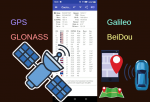
HADES-D (SO-121) ISS (ZARYA)
RADFXSAT (FOX-1B)
SAUDISAT 1C (SO-50)


Satellites SSB/CW

Type selected: A_m_a_t_e_u_r
FUNCUBE-1 (AO-73)
JY1SAT (JD-97)
OSCAR-7
RS-44 & BREEZE-KM R/B
XW-2B

Type selected: A_m_s_a_t
MESAT-1    

Planned launches of r/l satellites in 2024

*MARIA-G(HADES-F) - should be launched at the end of 2024. Form factor 1.5u Pocketqube. MARIA-G will provide radio amateurs around the world the ability to relay FM voice and messages AX.25 / APRS 300 / 1200 bps. The satellite will also transmit telemetry with its status, voice and CW messages. All this will be achieved by implementing SDR based FM and FSK repeater. The FM/FSK repeater will be available all the time and open with the squelch level without the need for a PL/CTCSS tone. MARIA-G's main mission is to be an FM repeater, but it will also include a simple guessing game implemented by students from Maria Guerrero High School in Collado Villalba - Madrid (Spain). The satellite will send a clue every week on the CW, so hams will have to solve the mystery with all the clues.

*UNNE-1(HADES-E) - Form factor 1.5u Pocketqube. UNNE-1 will provide radio amateurs around the world the ability to relay FM voice and AX.25 / APRS 300 / 1200 bps messages. The satellite will also transmit telemetry with its status, voice and CW messages. All this will be achieved by implementing SDR based FM and FSK repeater. The FM/FSK repeater will be available all the time and will be opened by the squelch level without the need for a PL/CTCSS tone.

Source

Requirements for VHF antennas for satellites

V/U satellites - "mode J"

Sufficient setup:

  • TX - Yagi144 3-5 ele.

  • RX - Yagi435 6-8 ele.

Best setup:

  • TX - Yagi144 6-7 ele.

  • RX - Yagi435 11-15 ele.

    U/V satellites - "mode B"

Sufficient setup:

  • TX - Yagi435 6-8 ele.
  • RX - Yagi144 3-5 ele.

Best setup:

  • TX - Yagi435 11-15 ele.

  • RX - Yagi144 6-7 ele.

Legal basis for amateur radio satellite communications

Date of editing: September 09, 2024.


Related publications