20
May
2020
14:54

APRS Review

20 May 2020 14:54

What is APRS?

APRS is a system for transmitting messages and geographical GPS coordinates based on Packet (AX.25 Protocol) and AFSK 1200 modulation. APRS is designed to work in a small territory of one region, in the field of one digital relay (DIGI) or a group of relans connected to the network.

Another application of APRS is automatic weather stations that communicate the temperature, pressure, and wind speed through the air. They can be seen on APRS card. There are fixed and mobile beacons. Lighthouses that change their location along with the radio amateur and transmit the coordinates on the air are called "trackers" from the English word "tracking" - "отслеживание". Путь ("трек") будет нарисован на сайте, который собирает данные APRS. Либо, по координатам GPS других станций, передаваемых в эфир на частоте APRS 144.800 МГц можно в программе APRSdrOID Find other amateur radio amateurs nearby.

Using APRS, you can transmit messages on a certain territory without using the Internet. That is, all APRS stations listen and transmit on one frequency of the VHF range. Traditionally, the eastern hemisphere in the two -meter range uses the frequency of 144.800 MHz, but in America the frequency of 144.625 MHz. FM modulation, transmission method - Packet 1200 BPS. In the range of 70 centimeters, the frequency of 432.500 MHz is used.

The legal status of the APRS was changed in 2015 by order No. 156 dated 05.05.2015 "On amendments to the requirements for the use of the radio frequency spectrum amateur service and amateur satellite service in the Russian Federation ... No. 184" - according to it, the operation of radio stations in automatic mode is not allowed, except for lighthouses for studying (no more than 4 hours a day). However, on November 17, 2016, order No. 572 was released, which allows the amateur radio state to transfer to amateur radios on their technical condition and location: "Amateur radio beacon can transmit information about its location and technical condition."

APRS is called a global network - a package from the air passes through a gateway and is on the site https: //aprS.Fi или [https://aprs2.radiorubka.org]https://aprs2.radiorubka.org/). Таким образом, другие радиолюбители могут наблюдать активность APRS станций с помощью веб-браузера. Можно настроить программу APRSDROID или APRSIS32 или UIVIEW32 для отправки пакетов APRS по сети Интернет TCP-IP, без использования эфира. Для работы по TCP-IP понадобится получить пароль (только лицензированные радиолюбители могут использовать APRS) - для подключения к APRSdrroid по TCP-IP нужно получить passcode. Он выдаётся team AT aprsdroid.orG within a few days or a couple of weeks after providing an electronic copy of its amateur license.

What is Packet radio?

ПакThis radio is the transmission of messages and data in the form of packages, according to the AX.25 protocol. The history of Packet originates in the 70s of the last century. Then, long before the Internet, package radio was used to organize electronic ads (BBS) with access on the radio. Then, a weather station appeared, where packages can consist not only of the text, but also of the bit fields, for example, temperature values, wind speed. Package radio - not for competitions in radio sports, and not a field of weak signals. Using a package radio, radio communications (QSO) with neighbors in the region can be carried out. Previously, everything that is required for this is a computer with a TNC controller on both sides and VHF of a 2 -meter range (144 MHz), with the possibility of connecting a linear entrance and sound output to them.

What is AFSK 1200 modulation?

Modulation, along with the radio station, is the lowest, physical level for transmitting messages.
Two tones 1200hz and 2200HZ are used to transmit AFSK, which change during information transmission.

  • Type of modulation - FSK
  • speed 1200 BOD (BPS)
  • Used 2 tones 1.2 kHz for "Mark" и 2,2 кГц для "SpaCE "
  • The frequency shift between tones is 1 kHz.
  • Due to rapid manipulation, it looks like a spectrum of about 1300-1400 kHz wide.
  • At the beginning of the program there is a preamble of short flags serving for synchronization of modems, with a period of 6.7 ms.
  • The volume level of both tones should be the same (the sound spectrum of the AFSK signal should be even).
  • AFSK 1200 package modulation is widely used by amateur radio amateurs in the range of 2 meters (144-146 MHz) to transmit APRS at a frequency of 144.800 MHz in Europe and Asia and 144.390 MHz in America, 145.175 MHz in Australia.

What other types of modulations for APRS exist?

  • FSK modulation at a speed of 300 BOD (used on short waves in the ranges of 30 and 20 meters).
    Two tones mark и SpaCE is separated by the interval of 200 Hz. For transmission of radio data, it works in SSB mode.
  • BPSK modulation-used on amateur satellites DO-64 (Delfi-C3), AO-73 (Funcube-1). Speeds 300, 600, 1200, 2400 baud.
  • G3RUH FSK is used on VHF when transmitting at a speed of 9600 BOD. Coding is used using polynoma and limiting the spectrum width. Application: Cubesat radio amateur satellites.
  • 9600 BPS GMSK - used on satellite FalconSaT-3 for APRS.

What is AX.25

AX.25 - one of the transmission protocols (such as Inet TCP -IP V4, IPV6, IPX, AppleTalk). The difference between AX.25 and others is used mainly by radio amateurs, on nodes working in Packet mode. Also, through AX.25, they can exchange application information both on one personal computer and on different ones. The AX.25 protocol operates at the logical and software level (above physical). The transfer of information between programs with AX.25 support is organized using sockets (file flows). Access "one to many." Inside the sockets, low -level ("raw") data packages are transmitted consisting of 0 and 1. Frames are used to check the integrity of data packages in AX.25, which are organized according to the HDLC standard. There are two types of stations - the end stations Node and the intermediate nodes (relay) that communicate with each other - one transmitter and one or many receivers. There is an opportunity for traffic routing - with intermediate nodes (relayers) and limiting the number of intermediate components for each message. The end nodes are called terminal - TNC TErminal node controller. Промежуточные узлы бывают репитерами (digipeater или, сокращённо, digi) или же шлюзами в Интернет - "гейтами" (от слова gaTE - gateway). Through gateways, traffic traffic is entered into the APRS network (from the air to the computer network) or goes out (broadcasts on air). Through AX.25 you can transmit any data, even TCP-IP packages. Due to the low speed of the radio interfaces (1200 BOD), AX.25 radio amateurs use short messages 7 bits (only the letters of the Latin alphabet and numbers) or bit fields (telemetry, weather). All end nodes transmit data through one channel (at the same frequency). All APRS stations have the same rights to use the transmission channel. In order to avoid gear linings from different stations ("Collisies"), APRS implemented the employment of the radio channel with the TNC rye before the transmission starts.

What is HDLC

HDLC Protocol of control of the integrity of the frames AX.25 and synchronization of the receiver and transmitter. Zero (0) is encoded by a change in the state of modulation from negative to positive, and when transferring unit (1), the state of modulation does not change. The beginning and end of the frame is marked with synchro-sequence of 01111110 (or 0x7E). Long gears 1 are prohibited (before each unit walking, symbol 0 is inserted by units). At the end of the message, a 16 -bit control amount is added. A feature of the protocol is its insensitivity to a change in the polarity of the signal. That is, inverting the amplitude of the modulating signal C + on - and vice versa does not cause transmission problems.

What is kiss

KISS is a special protocol for the interaction of a computer and TNC. Since there is a sequential port between the computer and TNC, the data from the computer are packaged in HDLC frames and are transmitted between two points - the computer and TNC.
Both of these devices should understand this protocol. Programs for digital radio amateur species FLDIGI or MIXW can act as KISS controllers. However, for KISS, either hardware TNC controllers or TNC controllers program emulators are used. According to the KISS protocol, it is transmitted as data so commands for managing TNC. The KISS protocol was invented that various programs and controllers can communicate "in the same language."

TNC models

For example, popular and hardware controllers kantrOnics for amateur radio, MFJ -1270B or KISS software controller, which emulates a hardware controller in PC memory - serves to connect programs to it.

List of TNC controllers, which are implemented in the hardware:

  • AEA PK-88 TErminal Node Controller
  • KantrOnics KPC-3
  • KantrOnics KPC-3 Plus
  • KantrOnics KPC-9612
  • KantrOnics Kam-98
  • KantrOntics Kam-Plus
  • KantrOnics Kam-XL
  • MFJ-1270CX (model is discontinued)
  • MFJ-1270CTX (Model is discontinued)
  • MFJ-1270B
  • MFJ-1270X
  • MFJ-1275
  • Bux communications Corp (BUX CommCo ™) RASCAL™ ("Radio And Sound Card Adapter Link" ™)
  • Rigblaster StandarD.
  • Rigblaster Plus (фирмы West Mountain Radio)
  • Rigblaster AdvantaGE
  • Rigblaster Plug and Play
  • TIGErtronics SignaLink USB
  • TIGErtronics SignaLink SL-1 Plus
  • Timewave HamLink USB
  • TimewaVE PK-96
  • Timewave PK-232/DSP
  • Built-in TNC controller of the Kenwood TS-2000 Transiver.
  • Kenwood Transivers TM-D710, TM-D710A, TM-D710E, TM-D710GA models.
  • Controllers built-in in the radio station D-STar.
  • Byonics - TinyTrak4
  • Kiss TNC based on Arduino (here)
  • Homemade TNC Controller IZ1DNJ

List of TNC software controllers and sound program modems Packet/AFSK:

What is Mic-E?

Mic -E is a regime uniting voice and digital communication (E - from the word Echolink) - transmitting APRS packages through voice repiteters. The APRS package is transmitted every time after each press and when the tangent button is released or the timer. This mode implemented in some radio stations. For a more reliable transmission, the length of the package is reduced to 0.3 seconds, only data are transmitted in digital compressed form: position, type of vehicle, speed, course (direction of movement). Mic-e message is short, only 30 bytes, while the usual APRS message consists of 90 bytes.

In order for MIC-E to work, the retransplant must recognize Mic-E Messages, it must be able to process such packages. So that other users do not hear the noise, there is protection against short tangent on the relayers, and the bags are shorter than 0.3 seconds and do not pass through the retransplant, do not cause opening the nozzle. However, messages at the frequency of Mic-E Retranstaller go to the APRS network. With the appropriate tuning of the repiter. ;-)

Mic-E support Kenwood, Anytone and Yaesu radio stations. A full list of radio support for Mic-E:

  • Yaesu ftm-350
  • Yaesu vx-8g
  • Kenwood D72
  • Kenwood Th-D7A, D7E
  • Yaesu ftm-400dr
  • Yaesu ft1d
  • Kenwood Th-D74
  • Anytone D878uv
  • Anytone D578UV
  • Yaesu ft-1d (r)
  • Yaesu ft-2d (r)
  • Yaesu ft-3d (r)

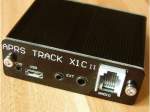
The first version of Mic-E was implemented in the form of a separate “box” (produced by TAPR/PACCOMM) which was connected to the microphone and dynamics of the radio station with wires.

The call sign to the APRS

The call sign for the sender and the recipient consists of a maximum of 6 signs. Example: RS0iss, UB3ZZZZ - coincides with the radio amateur call sign.

The call sign of the recipient in APRS

It can be a real radio amateur call sign (6 signs) or a standard recipient provided for in the APRS system:

Air, ALL, AP, Beaconcq, GPS, DF, DGPS, Drill, DX, ID, Java, Mail, Mice, Qst, Qth, RTCM, Sky, Space, Spc, Sym, Tel, Test, TLM, WX, ZIP.

For example, the GPS recipient is used by trackers who send the station coordinates to the Internet, Tel and TLM for telemetry.

What is SSID

The digital value in the field of the source address (i.e., the sender) standing after the suffix of the call sign through the hyphen is called the SSID field.
Example: UA1AA-7, -7 This is SSID. The SSID field determines the type of station and the icon on the map (if another is not indicated in the icon field).
SSID is used to separate several APRS stations belonging to one call sign. For example, RV1VV House, RV1VV-2 DACHA, RV1VV-5 smartphone, RV1VV-13 meteorway.

Examples of standard SSID:

SSID Application, purpose
-0 Your main station (the same as without indicating SSID)
-1 Additional house # 1 , digital relay, WX
-2 Additional house number 2, digital relay, WX
-3 Additional house number 3, digital relay, WX
-4 Additional house number 4, digital relay, WX
-5 d-star, смартфоны IPhone, AndrOID via TCP-IP, yacht
-6 Special activity, Statniki, helicopter
-7 Portable radio station W.alkee-talkee с функцией APRS (Kenwood D7, YaESU VX8R) or plane
-8 boat, bot or ship, or second car
-9 Car , mobile station for receiving and sending messages, The main car of the owner of the call sign
-10 Internet gateways Igates, connection to APRS-E v vright (no radio), motorcycle
-11 Ballion or probe, spacecraft
-12 Compact devices such as RFID, ARRSTT, DTMF Decider, laptops
-13 weather stations
-14 Automatic trackers for everyday wearing and transportation, trucks 24/7
-15 minivan, Any other additional station , other station (short waves, second WX, additional repiter, etc.)

Basic APRS symbols

Code Meaning
/[ . Running person
/* snowmobile
/= Train
/> Red car
/P Blue car
/( Car with a bearing
/` Airplane
\^ Airplane
/X Helicopter
/` Satellite plate
/O balloon
/a Ambulance
/b Bicycle
/E horse
/< moped
/j Green Jeep (SUV)
/k Red Jeep (SUV)
/C kayak or boat
/Y yacht
/s ship
/S inflatable boat with a motor
/U Yellow bus
\ k Red bus
/u Truck with a trailer ("truck")
/v electric car
/p dog or cat (Pet)
\ N Fishing
\ P parking (p)
/- House
/y House with VHF antenna
\- House with KV Antenna
/; Tent
/H Hotel
/Z Red House
/_ Red house with the inscription EOC
/E Red house with the inscription Fire
\ R dining room, food, place for food
/w Water (H2O)
\ r toilet
/! PD - 'POCket dialer', beeper, Dtmf
/B BBS - ads board
/% DX cluster
\ D DX
/$ Telephone tube
/l Laptop (Laptop)
/? Stationary computer
/x Linux
/Z Windows
/I TCP-IP
/r analog relay
/# Digital Retranser D
\# Digital Retransa, without the letter D
/& Reception gateway on the Internet G
\ & Reception gateway on the Internet, without the letter G
/) disabled person
\ S Space apparatus
/_ weather station
/n goal, gray target
\ Q goal, white target
\ o Purpose, target tarry
\ W Green Circle
\ _ Blue Circle
\ 0 Gray Circle
\ A White square
\ I Black square
\ a Blue rhombus
\ n Red triangle
\ S Orange circle
// . Red Point
\/ Black Point
\. question mark
\! Exclamation sign
\ L flag
\ g Two flags
/0 number 0
/1 number 1
/2 number 2
/3 number 3
/4 number 4
/5 number 5
/6 number 6
/7 number 7
/8 number 8
/9 number 9
\ $ dollar
/+ Red Cross (medical care)
\+ Black Cross (grave)
/~ Tilda (wavy line)
/ Vertical trait
\ J Lightning
\ t Tornado (tornado)
\ f Tornado (tornado) marked "FC" (Fog Cloud?)
\ ` rain or rain
\ w flood (W.ater)
\: Fire
\ p Sun because of the cloud
\ U Big sun
\ { Fog
\ H Smoke (haze)
\ F Ice rain (hypothermarized rain, ice)
\ D Drinking rain
\ B blizzard
\ b Strong wind (Blow)
\@ Cyclone or hurricane center
* Snowflake

What is the path of Unproto and WIDE value?

The Unproto path contains instructions on repetition of packages and acts only on digital retranstas.

According to the old standard, to transfer packages through the node, the TNC final device should have indicated the word Relay in the Path field. The word Relay means that such a package should be relayed by a digi-refiter on the air. Since there are more reptitors, Digi relayers also began to unite in chains and stars to increase the coating. In this regard, Widen-N paths began to be used. This is done to prevent endless relaying of packages and restricting the coating with one package of the territory - with each retransation, the number indicated in the SSID (for example, -7) N decreases by 1 and in the end the package will cease to be processed by relans.

ЗнаClassing the Unproto path for one relay: Wide1-1.

Note UNPROTO WIDEN-N.ater).

During radio communications "point - node) in direct sight is not needed, it must be empty.

Although you can introduce a call sign with an asterisk at the end (like Ra1aaa *) in the Unproto, but practice shows, this does not make sense, because The path in APRSDROID report is hidden, Ecoan is displayed all packages from any stations in direct visibility, and not just “directed” using the Unproto path.

See article on APRS.Fi "HOW APRS Paths work"

Using the empty path of Unproto in APRS

A package that does not indicate the WIDE path will not be relayed by any repeater, but it can still be listened directly. It can intercept the igate and transfer it to APRS-Sis via the Internet.
The package without a path is similar to an unpertured, general challenge (without indicating the call sign). For example, RX1xx transmission:

rx1xx> APRS:! 60.56ND31.501E & It can be seen that with an empty path of UNPROTO there is no call sign of the second correspondent or instructions to relay the package. But the operator _lubi_ APRS radio station can answer such a message manually. ### Using "CQ" and "All" in Unproto Just as with an empty track, such a package is ignored by retransters, but it can be listened directly to it. rx1xx> aprs: CQ:! 60.56nd31.501E & The CQ and ALL call is broadcasting, "all." ### Using a special Unproto path for satellites As a path for carrying out ties through APRS through satellite relayers, a general call path should be indicated: APRS path options for the International Space Station (ISS): From the ground to the ground, through the ISS retransplant two of the easiest UNPROTO way: * Ariss * Ariss, cq (The second option is a general challenge). [Source - site fars.k6ya.orG](https://www.fars.k6ya.org/docs/aprs_via_iss.pdf) More complex options for the path of UnPoroto, from the topic ["APRS via ISS"](http://www.cqham.ru/forum/showthread.php/11624-APRS-%D1%87%D0%B5%D1%80%D0%B5%D0%B7-%D0%9C%D0%9A%D0%A1/page196?p=975117&highlight=ARISS#post975117) на сайте cqham.ru: * Ariss, rs0iss*, wide1-1, wide2-2 * Ariss, rs0iss*, wide1-1 (The call of the Cosmic Station may indicate in the response to the relay of the messagers0iss-3 или rs0iss-4 - не имеет значения, поэтому выбран вариант RS0ISS*; WIDE1-1 и WIDE2-2 для ретрансляторов пакетов в Интернет через i-Gates). If relaying packages on the Internet via I-Gate is not needed: * Ariss, rs0iss* (Then you need to receive your own signals, retraneled through the digital relay of the space station) ISS lighthouse from space to Earth (used only at the space station): * CQ, sgate (The retranspect adds sgate to distinguish “descending” packages from “ascending”?) #### What is the relationship of Wide and SSID? | SSID | Wide | |:-: |:-:: | | -0 | Guide to the VIA field in the frame AX.25 | | -1 | Wide1-1 | | -2 | Wide2-2 | | -3 | Wide3-3 no sense | | -4 | Wide4-4 no sense | | -5 | Wide5-5 no sense | | -6 | Wide6-6 no sense | | -7 | Wide7-7 no sense | | -8 | "Northern Way"* | | -9 | "South Way"* | | -10 | "Eastern Path"* | | -11 | "Western Way"* | | -12 | "Northern Way"* + wide | | -13 | "South Way"* + wide | | -14 | "Eastern Way"* + wide | | -15 | "Western journey"* + wide | * - northern, southern, eastern and western paths are not used in the new N -n paradigm. The initial scheme no longer works. The idea was that SSID participated in subtracting from the maximum number of transitions, so that at home -0 ,1, -2 the least of all (because they have a large coating area), and then the SSID -6, satellites and aircraft, SSID -12 ...- 15 -small devices are retired. In practice, this gave rise to "avalanches" of packages repetitions, if the number of relayers, more than one. Instead, a new N-N circuit has been invented. ! The first number along the N-N type is the maximum number of desired digital relay. The second is the number of potential transitions remaining when transmitting a package from this digital retranstale. During the relay of the package of the digital Retransa, the APRS reduces the second number per unit. [Source - http: // wa8lmf.net/DigiPaths/](http://wa8lmf.net/DigiPaths/),[](https://blog.aprs.fi/2020/02/how-aprs-paths-work.html). The UNPROTO track schemes are not used above WIDE2-2 due to a low probability of successful delivery of the package after 3, 4, 5, etc. nodes. Amateur package radio communications uses Packet modulation without error correction - not very tolerant of low -quality radio channels. The choice between WIDE1-1 and WIDE2-2 schemes depends on the relay settings and the TNC firmware version (TErminal Node Controller) at the relay node. I recommend that you find out from the owner of Digi, or through acquaintances, which scheme is used in a given area. Or use the test and error method. With the only relay-the Wide1-1 path. You can build your own package node using DireWolf by configuring it accordingly for APRS retransio. Before that, it is necessary to register a radio station in Roskomnadzor. #### How to send a broadcasting message to an APRS - Bulletin? Bulletin as follows from the meaning of the English word - the message attached to the button (Bullet) to the bulletin board. It can be called his fixed message. To send the ballot, to indicate ** Bln#** in the "Who" field, the message itself is the message. Example: to: bln# Program Xastir начнёт периодическую отправку такого сообщения. У других радиолюбителей и на сайте [https: //aprS.Fi](https://aprs.fi) бюллетень будет виден в отдельном спике "View" - "Bulletings". #### What is a news group? News groups are the same as subscriptions. Examples of groups: All, SPB, Baloon To receive messages from them, you need to subscribe. Subscriptions are carried out by ANSRVR ads, the functions of which are able to perform the APRSISE/32 program. #### How to subscribe to the news group? The APRS of the station should be the ANSRVR ads. Subscription to the command to: ANSRVR with the following text. 1) to subscribe: Example: to: Ansrvr J List of groups through a gap or (preferred option - subscription with the simultaneous sending of CQ to members of the group): to: Ansrvr CQ name_g group J Another option is a monitoring subscription K list of groups or call sign through a gap Example: to: Ansrvr K Russia

2) to unsubscribe

Example:

to: Ansrvr U List of groups through a gap 3) a list of available world groups to: Ansrvr ? There are also local groups, for example, SPB. 3) a list of world groups with the owners: to: Ansrvr D 4) sending a message to the group: to: Ansrvr message: cq name_gugps Message Example No. 1 Sending to the CQ group CQ: CQ: to: Ansrvr CQ CQ of your) Example No. 2 Sending to the SPB group "Privet wsem! " to: Ansrvr CQ spb privet wsem! (If you do not send CQ, an exception will automatically occur from the group within 24 hours). 5) see in which group I am to: Ansrvr L 6) Request the description of the group to: Ansrvr D The name of the group #### How to send a message "Soome Text" to the SPB news group? to: Ansrvr All spb some text or to: Ansrvr CQ SPB SOme text In other groups - similarly. ! Note. On a specific APRS Retransel, ANSRVR news function may not work (since it is not configured or disabled). #### What are APRS messages? * GPS position (station coordinates, speed, course and height) * Azimuth (for "fox hunting" - time, coordinates, azimuth) * Objects and entities (examples as “Mayak”, “Museum -apartment”, “Place of gathering participants” - objects. “Time”, “center of storm” - essence) * Weather (temperature, wind, pressure, humidity) * Telemetry (voltage, current) * Messages (from someone), analog SMS * Broadcast messages (ballots, news, ads) * Requests (to stations, directly) - end with the symbol "Questioning sign" (?). Ignored by gateways (receiving gate) and relay. * Answers (stations to requests and any messages) * Statuses (for example, Mic-E included) * Other. #### What are the programs for APRS? *** UI -View32 ** (Windows) - Tracker, Knot, gateway or Digi *** APRS -IS/32 ** (Windows) - Tracker, Knot, gateway or Digi *** uiss ** (Windows) - for radio communications through the International Space Station *** xastir** (linux) - for TNC, node, gateway or digi *** direwolf** (Windows, Linux) - может работать как APRS-трекер, приёмный шлюз или цифровой ретранслятор. В России допустима работа лишь под контролем оператора или rx-only gateway. * **aprsdigi ** - for organizing the Digi Repiter *** APRSDroid** (AndrOID) - To send their coordinates to the APRS network *** u2APRS ** (does not work under the latest versions of Android) * **aprS ** · Python language module for connecting to APRS using TCP-IP (installation via pypi). *** APRSISE/32 ** (WINCE) #### What are APRS objects? Using the principle of APRS objects, an amateur radio can note on the map inanimate entities, that is, objects - such as a camp, a lighthouse, headquarters, a museum, etc. In the United States, sometimes the center of the natural element is a hurricane. You can calculate the distance to the object as well as to another radio station. Sources: [http: // www.aprs.org/doc/APRS101.pdf](http://www.aprs.org/doc/APRS101.PDF) [http: // www.aprs.org/aprs11/Ssids.txt](http://www.aprs.org/aprs11/SSIDs.txt) [http: //aprs.gids.nl/uidigi/prOtocol.txt](http://aprs.gids.nl/uidigi/protocol.txt) [http: // www.aprs.org/ansrvr.htmL.](http://www.aprs.org/ansrvr.html) [https://www.dxzone.com/catalog/Software/APRS/](https://www.dxzone.com/catalog/Software/APRS/) [https: // base.garant.ru/70263118/](https://base.garant.ru/70263118/) - Приказ №184 от 26.07.2012 [https: // digital.gov.ru/ru/documents/4725/](https://digital.gov.ru/ru/documents/4725/) - Приказ №156 от 07.05.2015 [https: //www.consultant.ru/document/cons_doc_LAW_208732/](https://www.consultant.ru/document/cons_doc_LAW_208732/) - Приказ №156 от 07.05.2015 [http: // www.ax25.net/kiss.aSPX](http://www.ax25.net/kiss.aspx) [https://destevez.net/2016/06/kiss-hdlc-ax-25-and-friends/](https://destevez.net/2016/06/kiss-hdlc-ax-25-and-friends/) [http: // www.aprs.net/vm/DOS/Mice.htm](http://www.aprs.net/vm/DOS/MICE.HTM) --- _Data of the last change: 07.06.2025_

Related publications