21
December
2023
Reception of HamDRM and SSTV in the QSSTV program through WebSDR
16:40

Reception of HamDRM and SSTV in the QSSTV program through WebSDR

21 December 2023 16:40

I decided to get distracted a little and launched the SSTV reception (Slow Scan Television) through Websdr in Linux Mint.

SSTV is an analog standard for transmitting color images by air for radio amateurs.
HamDRM is an OFDM-based digital standard (16QAM) with the ability to transmit FTP links for displaying images. HamDRM can also transfer files.

both standards use the standard sound strip width - 2.5 kHz, which allows you to transmit data using the sound card and the SSB transceiver both on KV and SSB or FM mode. The SSTV standard has been known since the 1970s and has been widely popular, HamDRM was recently created by amateur radio operator Cesco, HB9TLK, who adapted the Digital Radio Mondiale audio and video standard to amateur radio communications.

The advantages of SSTV and EasyDRF standards do not use any network resources for transmission. In addition, the SSTV can be launched in any frequency range of 80, 40, 20 or 10 meters - “calling frequencies” are provided. SSTV can be found even on CB, "Citizen`s Band" in a band of 11 meters.

The article will only consider the option of receiving images and links (URLs) in the QSSTV program, without using a transceiver through the WebSDR receiver. The fact is that at present I do not have a KV antennes in the city where I live. SSTV activity occurs in the range of 14 MHz.

Beyond the scope of this message is the program transmission mode Easy Digital RaDio Files (Easydrf). Therefore, not all gears at the DSSTV calls can be decoded using QSSTV.

Preparation

In the system for use with a transceiver, i.e. To work on the air, a sound card should be installed:

aplay -l
**** List of Playback devices **** 
Map 1: Audio [usb audio], device 0: usb audio [usb audio]
  Подустройства: 0/1
  Подустройство №0: subdevice #0

If the sound card is connected but not recognized, check the device using the program hwinfo.

sudo apt instaLL hwinfo
hwinfo
51: USB 00.3: 0000 Unclassified device
  [Created at usb.122]
  Unique ID: wFvx.Npxn1JxF5yB
  Parent ID: pBe4.v2Pu0CqjCO5
  SysFS ID: /devices/pci0000:00/0000:00:1e.0/0000:01:09.2/usb2/2-4/2-4:1.3
  SysFS BusID: 2-4:1.3
  Hardware Class: unknown
  Model: "Realtek USB Audio"
  Hotplug: USB
  Vendor: usb 0x0bda "Realtek Semiconductor Corp."
  Device: usb 0x4e16 "USB Audio"
  Revision: "0.03"
  Driver: "usbhid"
  Driver Modules: "usbhid"
  Device File: /dev/input/event3
  Device Files: /dev/input/event3, /dev/input/by-id/usb-Generic_USB_Audio-event-if03
  Device Number: char 13:67
  Speed: 480 Mbps
  Module Alias: "usb:v0BDAp4E16d0003dc00dsc00dp00ic03isc00ip00in03"
  Driver Info #0:
    Driver Status: usbhid is active
    Driver Activation Cmd: "modprobe usbhid"
  Config Status: cfg=new, avail=yes, need=no, active=unknown
  Attached to: #61 (Hub)

Once I ran into a problem - the sound card was not defined. The reboot of the PC, pressing F2 and changing in BIOS Setup mode of soundcard from HD Audio to AC97 has helped (but I don't remember exactly).

dconf write /org/gnome/desktop/sound/input-feedback-sound "false"
dconf write /org/gnome/desktop/sound/event-sounds "false"

Without a transceiver, only for SSTV reception via WebSDR, no sound card required. Audio input is via a software loopback device to the QSSTV program input, which "listens" to audio from the PulseAudio server, paired with a web browser receiving audio from WebSDR.

To redirect sound from a web browser to the input of the receiving program - QSSTV, a regular or virtual audio cable is not needed, it is enough to perform a small adjustment of the sound mixer pavucontrol, as was previously described in the article Redirecting WebSDR sound in Linux to the FLdigi input using the standard Pavucontrol volume control.

1) Installation of the application for receiving SSTV and HamDRM

Linux has a QSSTV package containing the program of the same name. She knows how to accept and transmit pictures of slow TV - SSTV and digital HamDRM.

sudo apt install qsstv

After installing the program, QSSTV launched it from the command line

qsstv

2) Dutch WebSDR will be used as a source http: // websdr.ewi.utwente.nl:8901/, on which you need to set the frequency to 14230 kHz.

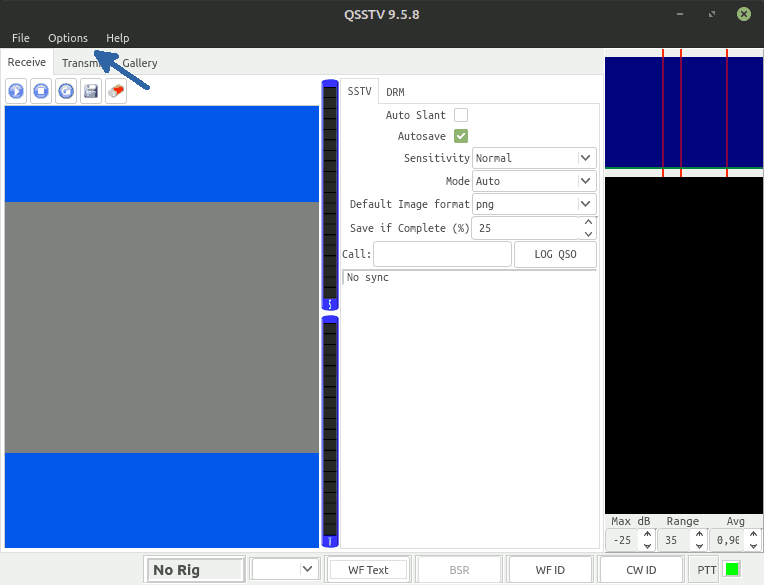
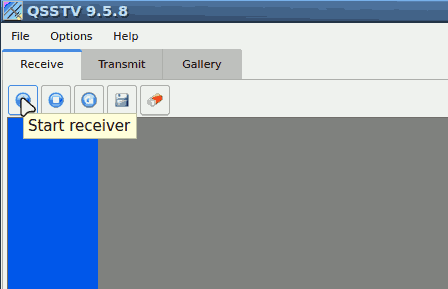
3) In the QSSTV program, click the "Reception" button. - extreme on the left "STart receiver"
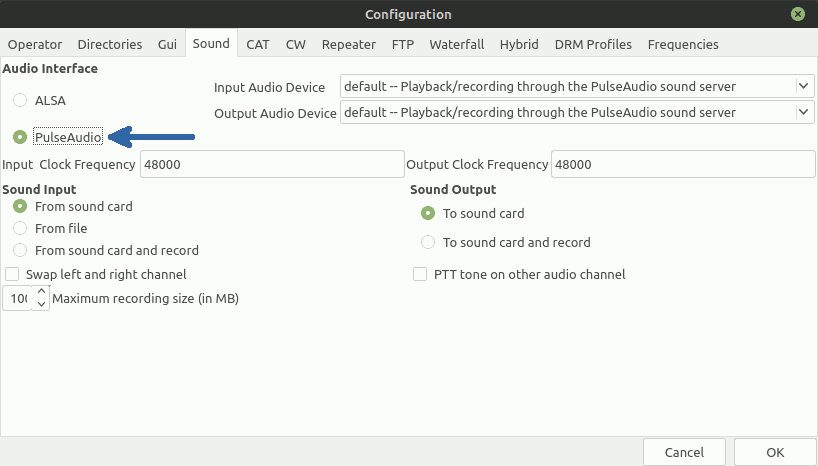
receiver. Reception of information from the sound device specified in the menu "Config" (Config) will begin. Should be used in options - config method Pulseaudio (default):
QSSTV1
QSSTV-Config

In the QSSTV program and transmission go to the standard (Default) sound device in the system. If there is a sound card, then from it. I have this external sound USB card, but there may also be a sound controller built into the motherboard.

For a mode with WebsDR, you need to enter the sound into the QSSTV program from a virtual device, you need to install the volume mixer.

sudo apt install pavucontrOl

4) Setting up the volume mixer pavucontrOl

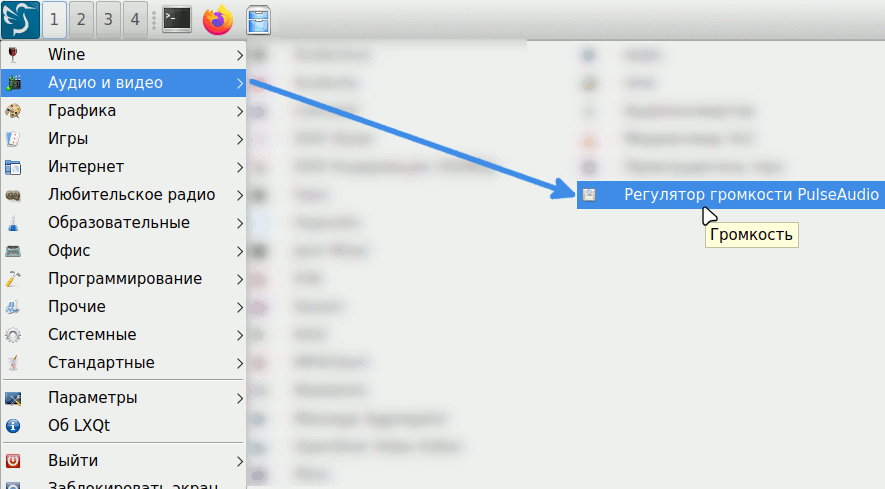
With a launched QSSTV receiver, in another window we run Pavucontrol. It can also be found in the "Start" menu - "Audio and Video" - "Pulseaudio volume control" .
Pavu1

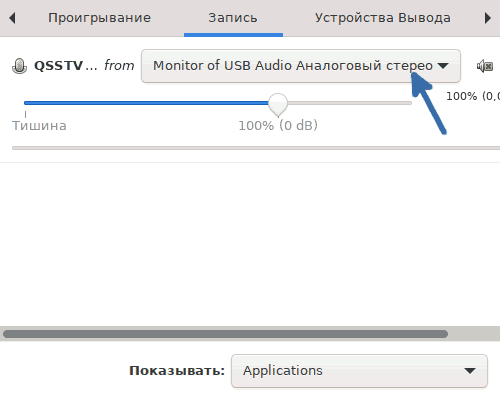
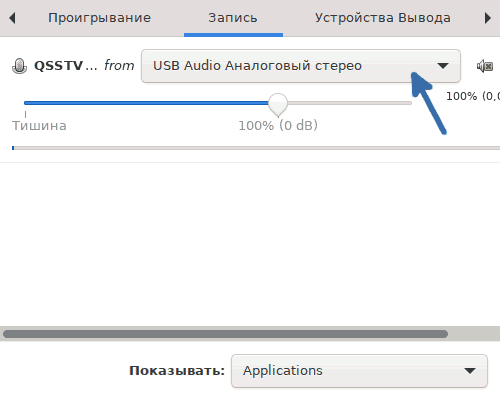
In the mixer we find the bookmark "Record". On it we change the sound source - either a USB card (for real reception and transmission using a radio station) or “USB Audio Monitor” (for WebSDR):

For a redirected sound source (websdr):
mixer1
A real sound source (sound card) for transmission through the transceiver:
mixer2

If in parallel in the browser the websdr receiver is launched, the image of the image will immediately begin in the QSSTV program.
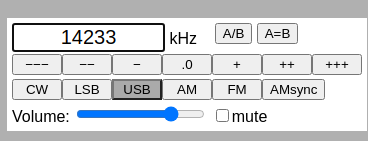
But first, you need to configure the web browser at a frequency of 14230 or 14233 kHz (depending on the "waterfall").

Daytime frequencies for SSTV:

  • 14230 kHz - for analogy SSTV
  • 14233 kHz - HamDRM calling frequency

SSTV night frequency:

  • 3730 kHz

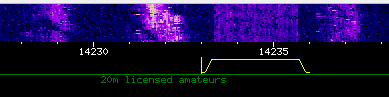
At the "waterfall" SSTV and HamDRM transmissions look different. SSTV is a pronounced tonal mode, while the DRM spectrum is similar to uniform "white noise".
SSTV and h spectraamDRM

Reception HamDRM (hybrid mode)

Reception frequency - 14233 kHz.
D-SSTV

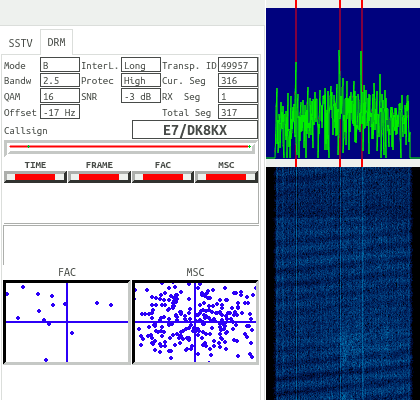
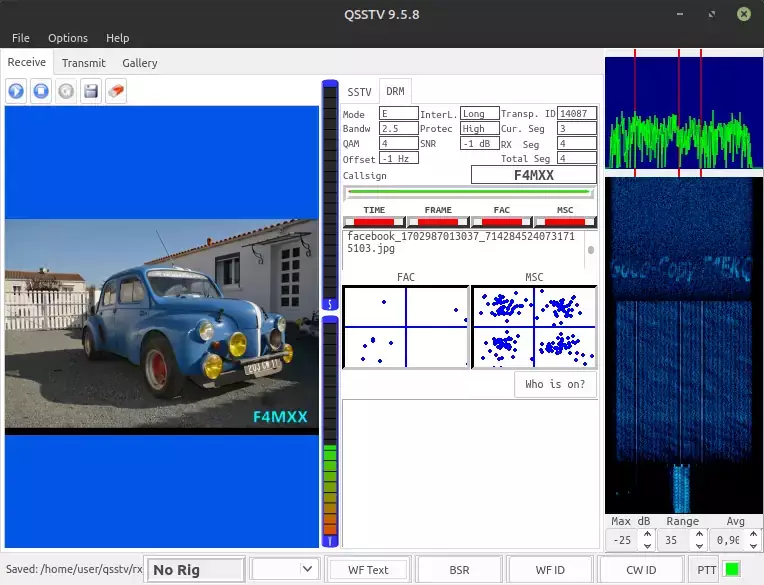
In QSSTV, I pressed the second tab DRM.
Reception - fully automatic. But the success of the reception depends, as usual, on the signal-noise.
In case of average or poor signal-to-noise ratio, the constellation is blurred and decoding does not occur:
hamdrm-aUTO
A good relationship with/w and the correct frequency is a correct constellation and successful transmission decoding:
ham_drm
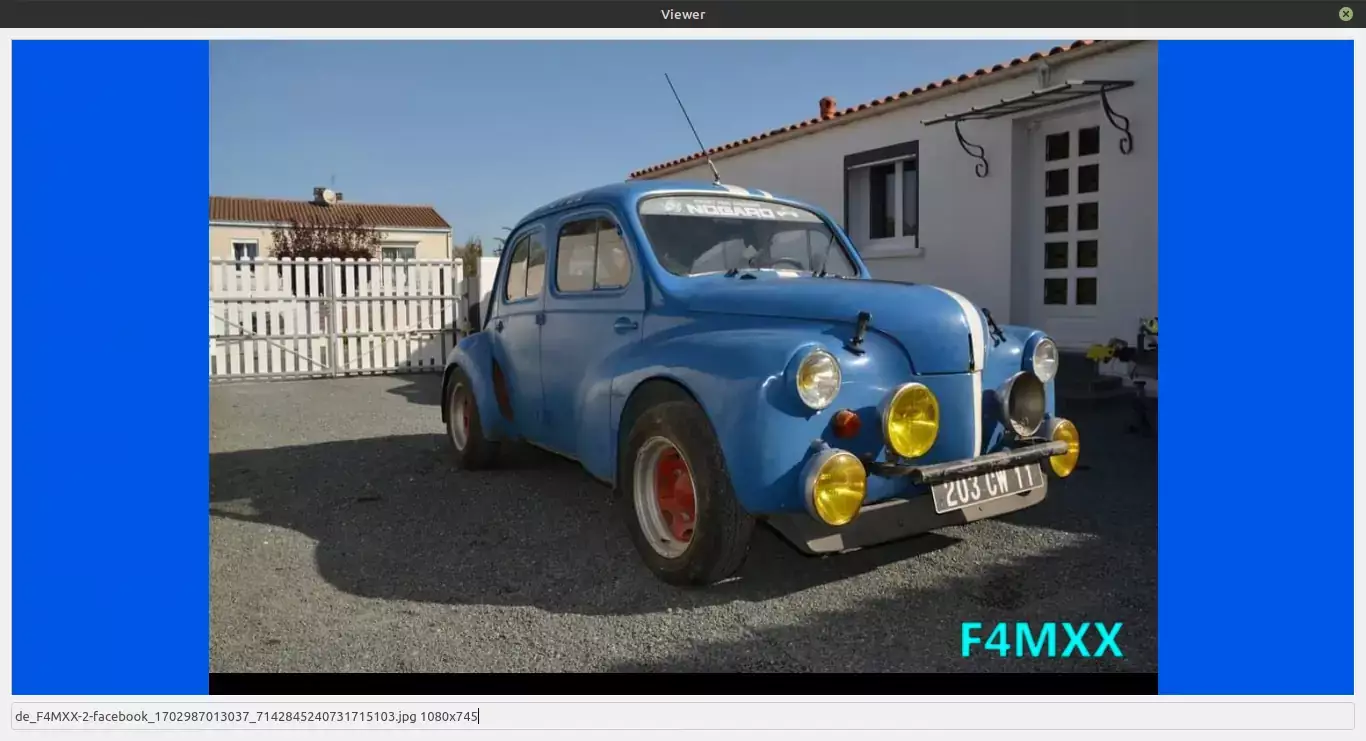
The picture loaded with FTP (hybrid mode) is characterized by very high quality, but it downloads via the Internet, not using radio waves:
F4mxx-car
There is also a long mode - the transfer of files in another EasyDRF program - I do not touch it.

Reception SSTV without a transceiver

I used to work on the air with this mode, the series contains, as I understand it, 4 or 5 programs:

  1. CQ of the first correspondent (general call)
  2. Reply to CQ of the second correspondent (transfer of both call sign and report 595)
  3. Answer to the answer of the first correspondent (transmission of the call sign and report)
  4. 73 from the second correspondent (who works for search)
  5. there may be a farewell transmission from the first correspondent

Transmission modes usually - Martin 2 or Scottie 1 (the same in duration). Speedy mode Robot36 is less common.
The QSSTV program independently recognizes the transmission mode.

Accepted SSTV pictures are stored in files with the expansion of .png to the /home/user/qsstv/rx_sstv.
M2_20231221_080526

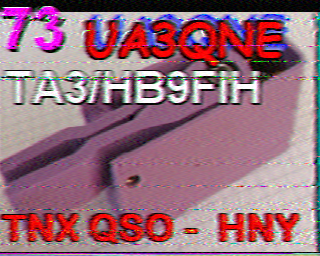
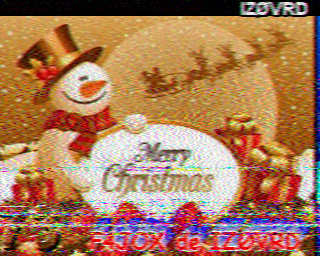
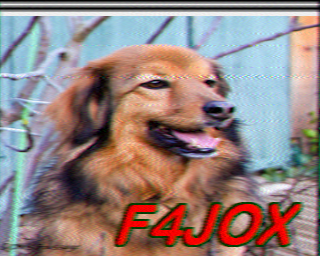
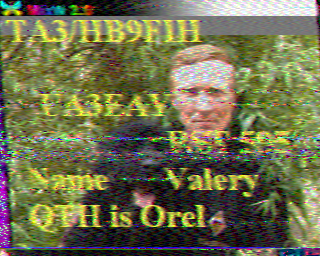
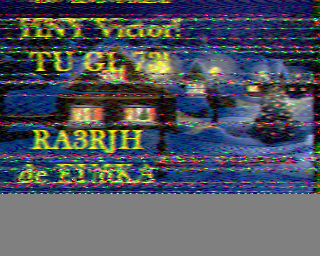
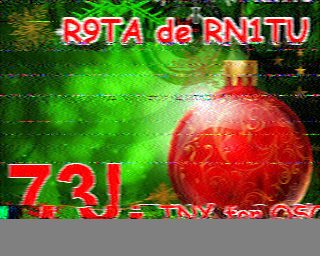
Gallery of pictures sstv and hamDRM accepted with WebsDR in QSSTV

S2_20231220_134807
M2_20231220_090027
JOX-73
M2_20231220_085529
M2_20231220_080719
KK
M2_20231220_075329
S2_20231220_083227
M2_20231220_080129
de_f4mxx-3-ImaGE

SSTV frequencies

range 20 meters

  • 14227 KHZ USB - SPECTIONAL DOCTURAL CALLECTION SSTV on KV
  • 14230 KHZ USB - Home SSSTV Frequency SSTV
  • 14233kHz USB - дневная вызывная частота HamDRM, also used SSTV (QRM interference)

    range 80 meters

  • 3730 KHZ LSB - Night Call Frequency SSTV
  • 3733kHz LSB - ночная вызывная частота HamDRM