Museum-Reserve "Gatchina"

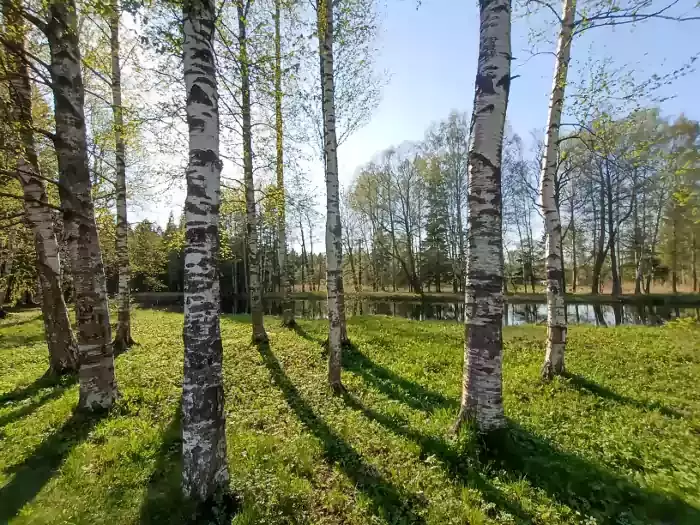
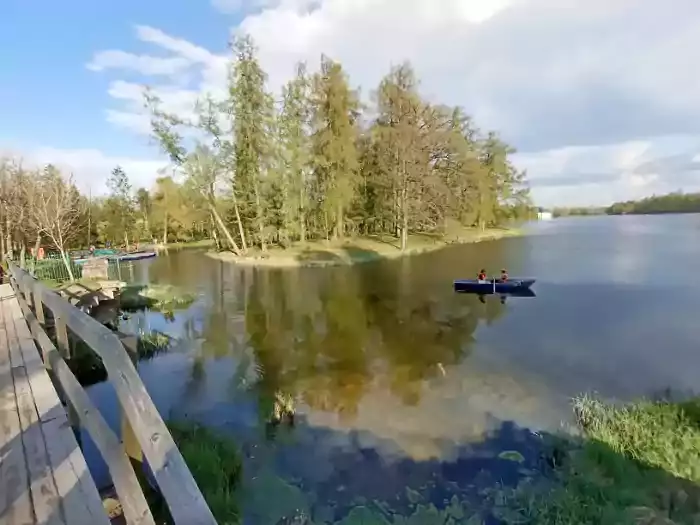
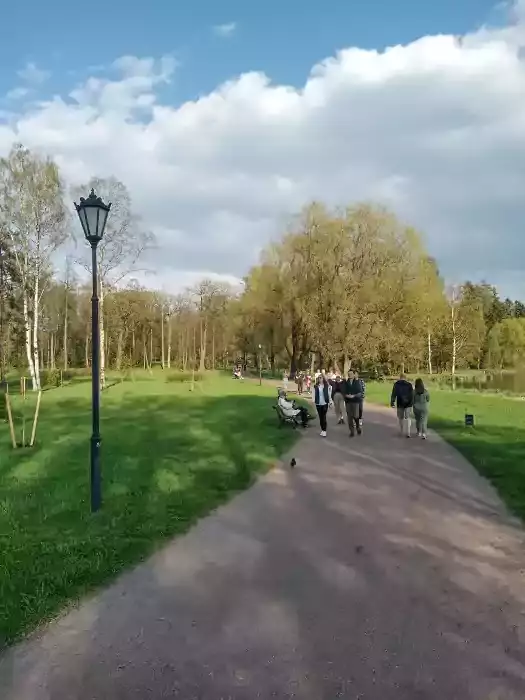
On Sunday, May 17, 2021, I visited the park of the city of Gatchina. In this 2021, Gatchina became the capital of the Leningrad region. Also, I haven't been to the park since school.

Early history of Gatchina

From time immemorial, this territory was inhabited by the tribes of the Finno-Ugric group: Izhora, Finns, Veps and Vods. On the site of Gatchina earlier, in 1499, there was the village of Khotchino (from the Finnish "хотша" - поселение на месте сожжённого леса). During the "Time of Troubles" - 1598...1613, the territory around Khotchino was captured by Sweden, which reached the height of its power in 1617...1721. After Russia's victory over Sweden in the Northern War of 1700...1721, Peter the Great received these lands as a result of Peace of Nystad, and immediately presented Gatchina to his sister Princess Natalia. After her death in 1765, the settlement of the Gatchina manor was bought from the heirs of Natalia by Empress Catherine II.
Catherine II immediately presented Gatchina to her favorite, Count Alexei Grigorievich Orlov-Chesmensky, who helped the Empress during the palace coup against Peter III (Karl Friedrich of Holstein-Gottorp).

Count Orlov - the first owner of the palace and park

In summer 1766 how Reports wikipedia, "The construction of the Great Gatchina Palace, designed by the architect Antonio Rinaldi, the creation of a landscape English park and the improvement of hunting grounds began on the estate". It was Count Grigory Orlov who was the founder of the palace, it was he who laid out the park around the White Lake. Gardener John Bush was invited from abroad to plan the park in the free English style. Instead of conifers, typical for this area, thousands of broad-leaved oaks, elms, maples, as well as weeping willows, larches, ash trees and lindens are planted. However, soon Count Orlov fell ill (went mad) after the death of his beloved wife Katenka Zinovieva, and the unfinished palace began to collapse.

Paul I - the owner of the palace and the founder of the city of Gatchina

After the death of Count Orlov in 1783, Gatchina was bought from the heirs - the Orlov brothers - by the state. This time, Catherine II presented the palace to her son, Pavel Petrovich (the future Emperor Paul I). Pavel and his wife Maria Feodorovna (who came from Germany to Russia in 1776) together continued the construction of the Gatchina Palace and the development of the park. Pavel Petrovich turned the palace into a fortress with moats and bastions. As a result, from 1783 to 1796, the Gatchina Palace became the residence of the imperial throne. At that time, many new park buildings were created. On November 11, 1796 (November 22) according to the old style Paul I granted Gatchina the status of a city. At the same time, Gatchina became the center of the Gatchina district. Tree planting continued in the park. In 1794 alone, 16500 lindens were planted. Large-scale redevelopment of landscapes was carried out, new park structures were built - pavilions, sculptures, bridges, tents and benches were installed.

Maria Feodorovna - the third owner of the palace and park

The assassination of Paul I in 1801 by conspirators changed the fate of the palace and park for the second time. Gatchina passed to his widow, Empress Maria Feodorovna (Sophie Dorothea of Württemberg), who single-handedly owned the palace and park for 28 years. The palace was subjected to a smooth repair - the roof was changed. It was also adapted for year-round living. However, after the death of her husband, the Dowager Empress visited Gatchina only occasionally, spending most of her time in Pavlovsk.

Nicholas I - the fourth owner of the palace

In December 1828, Maria Feodorovna transferred the palace and the park to her eldest son Nicholas I. This means that the Gatchina Palace did not belong to the state, as, for example, the Grand Palace in Peterhof. Emperor Nicholas I carried out the second complete reconstruction of the palace at his own discretion - he deepened the cellars and raised the side parts - squares. The central body of the palace ceased to dominate the building. Nicholas I rebuilt the bastions - the dilapidated retaining walls were dismantled and redone. A grand staircase and a parade ground appeared. On August 1, 1851, on the parade ground in front of the palace, he erected a monument to Paul I, the father of Nicholas I. (The monument to Paul I is now a symbol of Gatchina, his image is applied to various souvenirs).

Alexander II - the fifth owner of the palace

Alexander II is the son of Nicholas I. He came to Gatchina infrequently, but he arranged entertainment on a grand scale - balls, theatrical performances, charades, hunting in the surrounding protected forests. Wild animals became the prey of hunters - hares, pheasants, deer and wolves, and even bison. Near the Gatchina Park, there is still a huge forest park called the Menagerie. Alexander II also repaired the palace and the park. The main achievement of Alexander II, a reformer in Gatchina, is that he continued the railway line from St. Petersburg along the Warsaw line to Gatchina. After the treacherous murder of Alexander II by terrorists, "Narodnaya Volya" members in March 1881, the palace became the personal property of Emperor Alexander III.

Alexander III is the sixth owner of the park and palace

Alexander III was the grandson of Nicholas I. Emperor Alexander III lived in Gatchina with his family, was engaged in the education of children. Therefore, state affairs were transferred to Gatchina. There was not much entertainment. Alexander III loved to fish on the lakes in silence. Alexander III is known under the nickname of the Peacemaker - during his reign, Russia did not wage external wars. Alexander III died on November 1, 1894 at the age of 49 from kidney disease - nephritis. During the reign of Alexander III, the palace was supplied with electricity, telephone, water supply and sewerage were replaced, stove heating was replaced by heater heating.

Nicholas II in Gatchina

Nicholas II was the son of Alexander III, and the palace and the park were inherited by the autocrat Nicholas II, the last emperor of the Russian Empire. Nicholas II visited Gatchina only occasionally, for hunting and to meet with his mother. In 1910, Nicholas II presented one of the bison of the Gatchina Park Zverinets to the Moscow Zoological Park. "The highest gift to the zoological garden - the bison - has been delivered to Moscow", the newspaper "Voice of Moscow" reported.

After the Revolution of 1917

After the February (bourgeois) revolution of 1917, the palace and the park ceased to be the personal property of the emperor. An inventory of the items of the palace and park was carried out. The period from 1918 to 1941 was the time of the development of the palace as a museum. No work was carried out to change it or the park. In the post-revolutionary period, the park became open to citizens.

Park during the Great Patriotic War

During the war of 1941-1945, Gatchina was under the occupation of Hitler's troops from 1941 to 1944. In the park, many trees were cut down for firewood. Before retreating, the Nazis mined and set fire to the palace. The bridges in the park were either destroyed or badly damaged. The sculptures were not damaged, because they were removed and buried in the ground.

Restoration of the park after the war

The park and buildings were demined, fragments were removed from the ground. A buried sculpture was raised from the ground. In the first post-war 4 years, about 6000 trees were planted in the park. In 1960-1980, a number of pavilions were restored.

Gatchina Park at the present time

At present, the park exists as a place of recreation for residents of Gatchina and tourists. As in the days of the USSR, there is a boat station on the lakes, but not at the Admiralty, but from the opposite bank, at the Big Zverinsky Gate. Security is walking in the park. There is one café. At the entrance, there are checkpoints with "turntables" (but the entrance to the park is free).

Attractions of the park

  1. Amphitheatre
  2. The Eagle Column is the oldest exhibit of the park
  3. Sylvia Gate - Entrance to Sylvia Park
  4. District "Sylvia"
  5. Farm
  6. Farm Well
  7. Aviary
  8. Black Gate
  9. Cascade Gate
  10. Forest greenhouse
  11. Greenhouse pond
  12. Chesme Obelisk
  13. District "Decanter"
  14. Silver Meadow
  15. Private garden
  16. Upper Dutch Garden
  17. Lion Bridge
  18. Priory Palace
  19. Karipin Bridge
  20. Karapin Pond
  21. Admiralty Gate
  22. Admiralty
  23. Balcony-terrace on the Long Island
  24. Lyabyazhy Island
  25. Voroniy Island (Crow's Island)
  26. Venus Pavilion
  27. Eagle Pavilion
  28. Humpback Bridge
  29. Big Stone Bridge
  30. Long Island
  31. Pikhtovy Island (Fir Island)
  32. Berezovy Island (Birch Island)
  33. Floating Island
  34. Sosnovy Island (Pine Island)
  35. Spruce Island
  36. Island of Love
  37. Portal "Moscow"
  38. Birch house
  39. Birch Gate
  40. Rectangular pond
  41. Octagonal Pond
  42. Sailor's house
  43. Water labyrinth
  44. Botanical Gardens
  45. Zverinsky Gate
  46. Shore Alley
  47. Dark Alley
  48. Birch Gate
  49. Cold bath
  50. Zakharov Island
  51. Topkiy Island (Marshy Island)

From the author

In 1 hour it was not possible to visit all the sights - from XYL we began to bypass the park from the side of the Amphitheater, and walked around the lake clockwise.


Похожие публикации