27
June
2022
Modifications of the Antenna W3edp
17:00

Modifications of the Antenna W3edp

27 June 2022 17:00

Yesterday, walking in the area of the Voronya and Orekhovaya mountains, he met a familiar radio amateur who shot a summer cottage with his family there. He promised him to tell about the KV Antenna W3EDP.

Introduction

A radio amateur from the village of Duderhof (which is next to the walnut mountain) showed equipment for short waves that he carries in the trunk of the car:

  • Chinese transceiver with a built -in antenna tuner (in a suitcase from a construction store),
  • Yambic telegraph key,
  • The base in the form of a bracket on the rating (rails are external details of the car body in the form of two rails along the sides along the roof designed for installation of the trunk),
  • A pin 2 meter high with an open extension coil, which can be transported in the trunk and screwed to the bracket on the railing.
    Such a set, according to the amateur radio, "is built by a tuner for all KV ranges, which allows you to easily go on the air from the car." It remains only to go along the highway higher up the mountain (in this village this is the village of Kavelakhta), where the operating church is located closer to the top of the mountain on the site of the destroyed temple of Princess Olga (address: Red Selo, Territory Duderhof, Avenue on October twenty, 97).

Also, on the garden plot, the radio amateur raises the Inverted Vee antenna, apparently for working at 80 and 40 meters.
It seems to me that the set of equipment is quite optimal - only a pin with an extension coil, which is not available in wide sale and complicated in repetition, confuses.

Therefore, I previously chose the W3EDP - the wire antenna, which is more simple to independently manufacture and install next to the car or in the country. For example, she does not need to connect the cable braid to the "mass" of the car, which can only be obtained using a partial disassembly of fastening the rails to the body.

Classic Antenna W3edp

АнтEnna W3EDP is a type of End Fed for short waves, but with an input resistance of 200 Ohms. It uses a 4: 1 transformer. The antenna was first proposed by H. J. Siegel in 1936.

W3EDP antenna consists of:

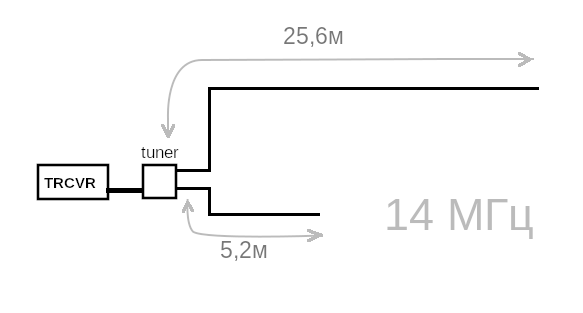
  • emitter 83 feet long ( 25.6 meters)
  • counterweight 17 feet long ( 5.2 meters), which performs the function of "earth" and does not participate in radiation.
    The emitter is made in the form of a M -shaped canvas, on the mast of 5 meters, thus, the horizontal part is almost 1 wavelength of the range of 14 MHz - 20.6 meters, and the total length of the canvas is 1.5 of the wavelength.
    W3edp_14MHz

The use of the wave emitter makes the horizontal conductor not in the "clouds", but at the corners of the horizon, even the lowest wire. The vertical part is responsible for circular vertical radiation like GP. The total radiation from the vertical and horizontal parts of the antenna is suitable for small and medium distances - not for DX. But, the small energy of the QRP transmitters is concentrated in the radius of the first jump in the radio wave.

In the original version of W3EDP, the coordination of 200 Ohms with a coaxial cable 50 Ohms is made using an inductive-tied circuit, as in the antenna of Fuchs. However, in modern conditions it is more profitable to use a manual tuner or unun, since on the T-tuner case or the "cold" end of the Unun, the voltage in the range of 14 MHz will be absent because it is connected to it a resonance 1/4-wave counterbel 5.2 meters long. To coordinate high input resistance with low instead of T-tuner, you can use Unun 4: 1 or Balun 4: 1, provided that the length of the antenna canvas is pruned to achieve a minimum of the KSV.

Also, you can use the antenna in the range of 7 MHz, but the counterweight will have to be lengthened to 10.5 meters. Instead of lengthening the counterweight in the classic W3EDP antenna, switching to a counterweight of another length is used.
The input resistance of such an antenna with a length of the canvas is 0.6 wavelength, as it is easy to guess, will also be high - about 100-150 Ohms, with a reactive component.
W3edp_7MHz

In the range of 3.5 MHz, according to my experience of a stationary installation of this antenna in a summer cottage, if you use a KOKOTY counterweight, then the voltage during transmission, microphone and body will be fired on the radio station, and the telegraph key will be burned. Therefore, in the range of 80 meters it is also better to use 1/4 wave counterweight 20 meters long. The resistance of such an antenna in the range of 80 meters is low, about 60 ohms. All local stations are responding to CQ the first time, 100 W - estimates 5.8-5.9, but long -distance stations, or even from neighboring Belarus - will complain about a weak signal (because the height of the installation of the antenna canvas for a range of 80 meters is clearly insufficient).

Differences W3EDP from the antenna ground PlaNe Range 14 MHz
1) the ability to work for the reception and transfer in other ranges: 3.5 and 7 MHz. Where shortened GP is deaf or not effective.
2) the orientation in the range of 14 MHz - in one direction, against the canvas of the antenna. Whereas 360 ° GP.
3) the input resistance of 200 Ohms versus 36-50 Ohms. Radiation resistance is much higher (75 Ohms versus 10-30 Ohms), because The radiation center is higher above the ground. The antenna with high input resistance is not demanding on the number of counterweights, less loss in the ground and the near zone. With one counterweight, the strengthening is about 1-2 dB W3EDP (GP has a strengthening of 0 dB with a large number of counterweights).
4) Due to the large length - the ability to use W3EDP as a reception in the ranges of medium waves for the MW DX hobby.
5) the radiation angle in the vertical plane of the GP is more gentle, which means GP is better for distant, DX radio communications. W3EDP is more suitable for QSO close and medium distances.

Differences W3EDP from the End Fed antenna
1) The length of the canvas is larger - instead of 20 meters (for unun 64: 1) the length of the canvas is 25.6 meters (for unun 4: 1), of which 5 meters go up.
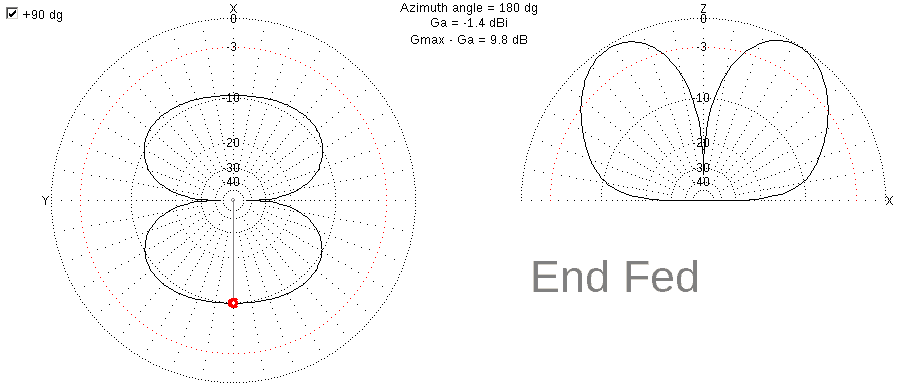
2) a certain orientation in the range of 14 MHz. Endfed has a symmetrical, bickented orientation diagram.
3) input resistance 200 Ohms versus 1,500-3000 Ohms.
4) Due to the absence of a rigid binding to a half -wave resonance, the antenna of the above sizes works not only on even harmonics 2 and 4 (where KSV = 1 ... 2), but on the odd - 3 and 5.
DN-EF
DN-W3EDP

Differences W3EDP from the antenna Invv
1) Nutrition is not in the center, but from the edge like End Fed.
2) in the range of 14 MHz is not demanding on the height of the installation.
3) W3EDP is a multi -band antenna of KV, subject to the switching of the counterweights.
4) is set up using a tuner in ranges of 160-10 meters. The W3EDP antenna is convenient in the presence of a manual or automatic tuner.

Modifications of the Antenna W3EDP

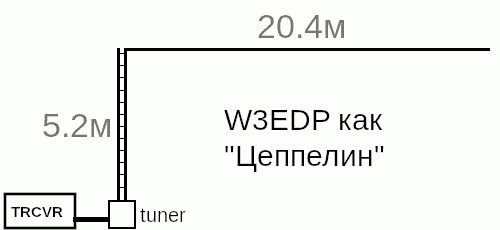
1) Instead of the counterweight lying on the ground, you can use a vertical two -wire line of 450 Ohms - then 1/4 the wave line plays the role of the resistance transformer from the high input resistance to low. The resulting antenna is known as "Zeppelin". This type of antenna was used in the aeronage era (a two -wire line and its continuation - the antenna wire was released from the airship).
W3wdp_as_cepp

Read more:
https: // qrznow.com/w3edp-antenna/

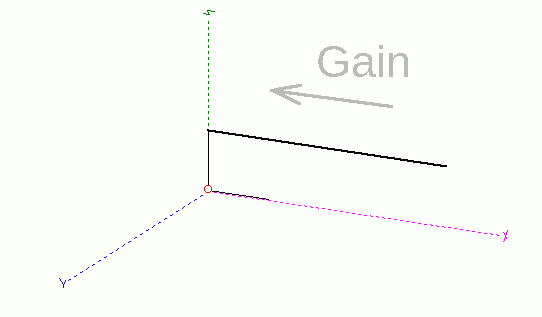
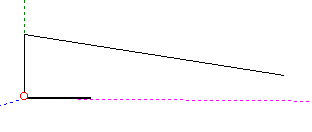
2) the slope of the emitter to the ground leads to the switching of the orientation diagram. Strengthening at low corners is obtained towards inclination.
W3edp-NormaL.
W3Edp-optosite

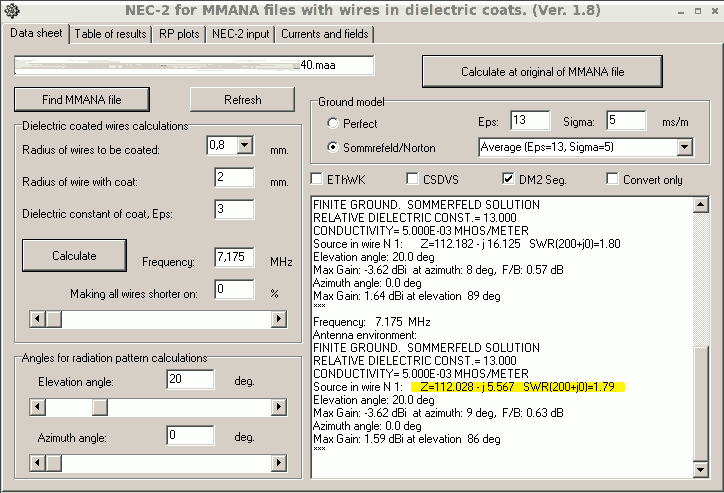
3) If it is assumed only in the range of 40 meters - an increase in the length of the canvas from 25.6 meters up to 30 meters positively affects the parameters of the antenna: there is no reactivity, and the input resistance of 112 Ohms can be agreed using a 1/4 -wave segment of the cable of 75 Ohms (partially crouched into a constrained throttle). In this case, the strip is 7.06 ... 7.3 MHz = 240 kHz.
30m_long

4) double -lengthened W3EDP - a length of 61 meters, counterweight 40 meters. Input resistance 50 Ohms, amplification -0.3 dB.
For work only in the range of 160 meters.

Classic W3EDP antenna in multi -band mode

The W3EDP antenna, like Zeppelin, works on harmonics. But, unlike Zeppelin, you need to switch the counterweights - for each range its own length.

When using the transformer 4: 1:

W3edp1
* with a counterweight of 5.2 meters in the range of 20 m (14.1 MHz) , power in the lower angle of the antenna, input resistance of 200 Ohms.
KSV (14mHz) = 1.5 , strip according to the level of KSV <2 is 13.5 ... 14.4 MHz.

* with a counterweight 10.5m in the range of 40 m (7.1 MHz) , with the same configuration:
KSV (7.1MHz) = 3 , strip 7.4 ... 8 MHz.

* with a counterweight 7.5m in the range of 15 m (21 MHz) , with the same configuration:
KSV (21MHz) = 2 , strip 21 ... 21.3 MHz.

* with a counterweight of 2.4m in the range of 10 m (28 MHz) , with the same configuration:
KSV (28.2MHC) = 5 .

With the displacement of the power point up, to a height of 1.5 meters - KSV worsens up to 4, which is associated with the radiation radiation (it is advisable to place it horizontally, along the surface of the earth).

In the range of 3.6 MHz Classic W3EDP with a 4: 1 transformer does not work, as you need to use a 1: 1 transformer (the antenna input resistance is close to 50 Ohms).

Comparison W3EDP with antenna LW ("Long Wire") when working in multi -band mode

For comparison, I will give a designed in the NEC-2 FOr MMANA вариант антенны Long WirE (LW), designed to work in several ranges.

Transformer 9: 1
Horizontal canvas 34 meters.
Counterweight 5.2 meters.
The height of the installation is 1.5 meters. Food to the upper corner (where the "in the string" should be stretched a horizontal canvas).

Antenna LW 34+5.2m:

Frequency, MHz KSV (450 Ohms)
3.5 2.0
7.1 2.5
10.1 6
14.1 4
18.1 2
21.1 3
24.9 9
28.1 4
28.5 3.7
29.0 5

When the horizontal part is lengthening - the emitter up to 35 meters, and shortening the counterweight up to 4.2 meters, the KSV in the 7 MHz range improves, otherwise it is unchanged: without changes:

Antenna LW 35+4.2m:

Frequency, MHz KSV (450 Ohms)
3.5 5
7.1 1.5
10.1 6
14.1 3
18.1 1.5
21.1 3.5
24.9 4
28.1 15
28.5 11
29.0 5
30.0 6

As you can see, with an input resistance of 450 Ohms (transformer 9: 1), the “Long Wire” antenna works in the larger of the ranges, but the W3EDP (transformation coefficient 4: 1) is better than coordination in one range, subject to the switching of the counterweights.

KSV W3edp 200 Ohms LW 450 Ohm
7 MHz 3 2
14 MHz 1.5 3
21 MHz 2 3

Also, the W3EDP with a 1/4 wave counterweight will not have a “hot” touch to the radio station during the transmission, because The voltage is removed from the body. Grounding from the radio station is not necessary, in order to avoid the current loops (it is necessary to perform a grounding type "star"). Near the power point, i.e., where the coordinating device is located (unun or tuner) and a counterweight is connected, thunderstorm protection can be implemented in the form of a pin clogged into the ground (radio engineering is connected to electrical).

Comparison W3EDP with antenna Endfed (with resistance transformer 64: 1)

The Endfed antenna has one short counterweight (a cable braid is often used) - 2 meters long and a canvas with a length of 19.7 ... 20 meters. Endfed input resistance is large and is 2-2.5 kOhm, and therefore the resistance transformer 64: 1 is used.
When using wires 20 meters long, EndFed operates in the ranges of 7 and 14 MHz without switching. Whereas the W3EDP antenna requires the switching of counterweights: 5.2 or 10.5 meters.

KSV W3edp 200 Ohms Endfed 2000 Ohms
7 MHz 3 <2
14 MHz 1.5 <1.5
21 MHz 2 2.5

Conclusion: W3EDP in terms of coordination with the cable is almost equal to endfed. At the same time, instead of a scarce Unun 64: 1, you can use either a popular BALUN voltage 4: 1, or a coordinating device (tuner), manual or automatic, because 200 Ohms - more convenient resistance for coordination. than 2000 Ohm.


Links:
W3edpantenna - AE5VV
W3edPPresentaTion.pdf Presentation


Data of the last change: 07.21.2025 - Phraseological errors are fixed .


Related publications